Top 10 Post-Funding Mistakes
Scaling with intention, discipline, and operational readiness
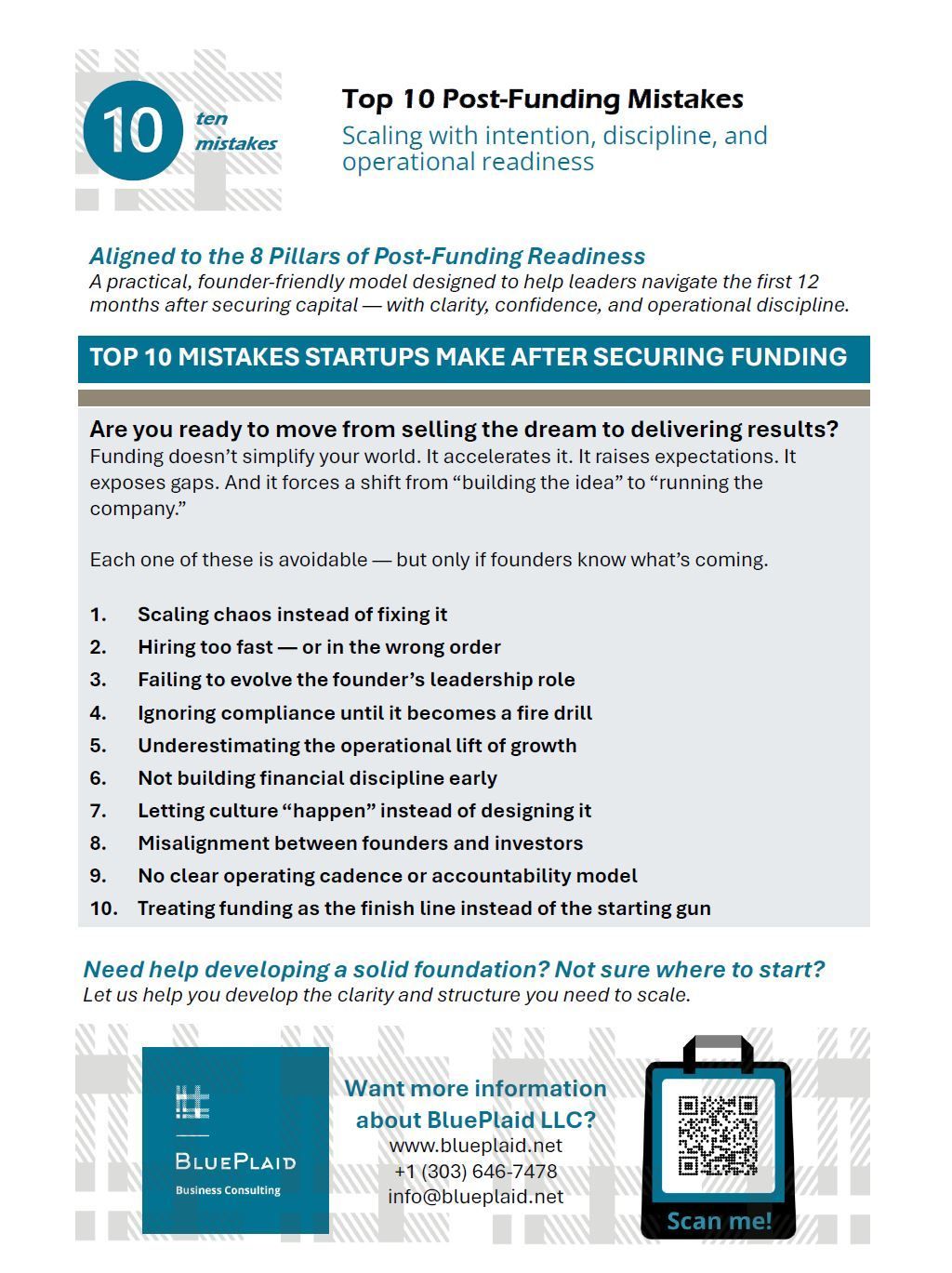
What Founders Don’t Expect After Funding
Founders pour everything into getting funded — the pitch, the deck, the storytelling, the courage to ask for capital. But very few prepare for what happens after the money hits the bank. And that’s where the real bottlenecks begin.
Funding doesn’t simplify your world. It accelerates it. It raises expectations. It exposes gaps. And it forces a shift from building the idea to running the company. After scaling organizations across 20+ countries, I’ve seen these patterns repeat over and over.
That’s why I built the BluePlaid Post-Funding Readiness Model — a clear, practical guide for founders and investors who want to protect momentum, avoid costly missteps, and scale with intention.
The post-funding phase is where companies either scale or stall — and the difference almost always comes down to operational readiness. So, get started by reviewing my Top 10 Post-Funding Mistakes that quietly derail even the most promising startups.
If you’re a founder, operator, or investor, these are the pitfalls worth avoiding!
👉 Access additional BluePlaid Post-Funding Readiness tools at:
https://www.blueplaid.net
These resources are designed to help founders build the operational discipline, leadership alignment, and scalable infrastructure investors expect — and companies need — to grow responsibly.
Need assistance with scaling your operations? Contact us today for an introductory complimentary consultation at
info@blueplaid.net.